
Link Building
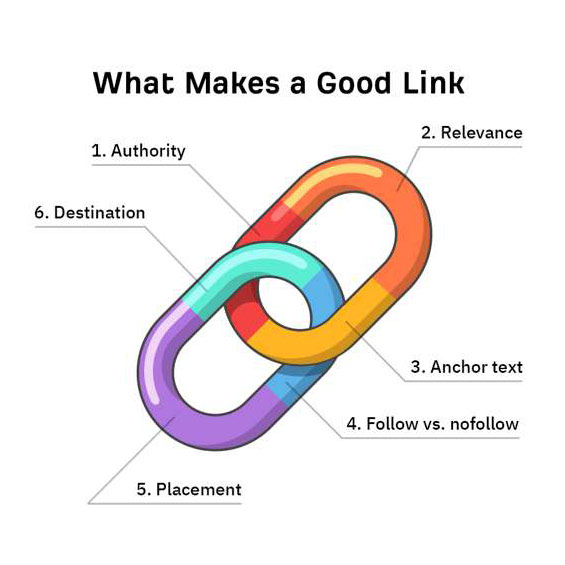
Link building is one of the most important aspects of building your website authority for Search Engine Optimisation.
Since good-quality, sustained backlinks are a sign of your website’s credibility, it is one of the most important components of any SEO campaign.
“The reasoning here is akin to a professional reference for a job: the more positive references a person has from experts in their field, the more likely you are to hire them, right?
So, the more trusted backlinks a website has, the higher the authority (trust flow) score”.
We build our clients the best, most relevant backlinks we can, consistently, using the right methods and the right anchor text.
This includes links from good-quality, relevant sources – all based on the latest SEO trends, which will contribute in a positive way to your website’s ranking improvement.
Bottom line, we build and sustain your link and citation profile so that you become – and stay – an ‘authority’ in your industry.
Read More About Our → SEO Case Studies
Link Building In More Detail
Backlinks are easiest to understand if you imagine the internet as a giant road network.
Signs within any road network direct you to another destination, which you follow until you arrive. That same principle applies to backlinks.
A basic example is when you are on a website with a link that says, ‘Click Here to Visit mywebsite.com’.
It is obvious that if you click, you will be taken to ‘mywebsite.com’.

The Art and Science of Link Building
Not all backlinks work like that, though.
Many are disguised, and instead of ‘Click here’, a highlighted word may take you to another website when you click.
There are also links hidden behind images, banner ads, and social media posts.
When it reads a backlink, Google sees a URL, which may be the destination URL.
However, it often contains text, a keyword; thus, Google sees that keyword as something your website relates to.
Why Links Matter: Google’s Open Secret
Every link to your site works as a vote of confidence. The more quality websites that point to you, the more weight Google gives your pages.
The catch is that not all votes count equally. A link from a respected site in your industry carries far more weight than a dozen from sites nobody trusts.
According to a study by Backlinko, the number of domains linking to a page correlated with rankings more than any other factor.
I’ve been using SEO Perth Experts since 2018 for my business Waist Trainers Australia. They have been consistently achieving our website high page rankings and great SEO results. Highly recommend Peter and the team for SEO.
Sheree McRae
Waist Trainers Australia
waisttrainersaustralia.com.au
A Little Trip Down Memory Lane
Back in the day (we’re talking late 90s, early 2000s), link building was the Wild West of SEO.
I remember when I first started in this field, people were doing all sorts of crazy stuff to get links.
Spamming comments, buying links by the thousands – you name it, someone tried it.
Then in 2012, Google released the Penguin update, and the ground shifted.
Sites built on spammy, purchased links dropped out of the results, some of them permanently.
Penguin has since been folded into Google’s core algorithm, which means link quality is now assessed continuously rather than in periodic updates.
The Golden Rule: Quality Over Quantity
Links still matter enormously, but it has never been a numbers game.
A handful of links from established, relevant sites in your industry will do more for your rankings than hundreds from low-quality directories.
That is the single biggest shift in link building over the past decade, and it’s the one most businesses still get wrong.
“Getting a link from a high-quality, relevant website is like getting a recommendation from a trusted friend”.
How We Build Links
Good links don’t arrive by accident. Here’s the process we follow.
Know Your Keywords
Businesses often chase the obvious term when the real opportunity sits in a more specific one. Working out which is which comes first, before any outreach begins. Chasing the wrong keyword means every link you earn is pointing at the wrong target.
Create Content That’s Worth Linking To
Nobody links to boring, run-of-the-mill content.
It takes real work. A properly researched guide that answers a question nobody else has answered well can keep earning links for years after it’s published.
That’s the difference between content that ranks and content that just fills a blog.
Spread the Word
All right, now, you have your killer content. Now what? Now it’s time to share it with the world!
This is where many, many people get hung up.
They produce amazing content and then simply… wait. However, there is a caveat – the online realm is a cacophonous one.
If you want to be heard, well, you’ve got to make some noise yourself.
Here are some ways to get your content out there:
1. Reach out to industry influencers
Find the big names in your field and let them know about your content.
But don’t just spam them! Build a relationship first. Comment on their blogs, share their stuff on social media. Then, when you reach out, they’ll be more likely to listen.
2. Guest posting
It is still one of the best ways to get links. Search for blogs in your industry that accept guest posts, then pitch them your ideas.
Most importantly, make quality posts for your feed!
3. Be active on social media
Share your content, engage with others, and be a part of the conversation in your industry.
4. Participate in online communities
Go where your audience hangs out – Forums, Reddit, Quora.
Most people are far more approachable than you’d expect. The worst outcome is usually no reply, and a well-targeted, genuinely useful pitch gets answered more often than not.
Mix It Up
Here’s something a lot of people get wrong—they focus all their energy on getting links from the biggest, most authoritative sites.
And sure, those links are great.
But Google likes to see a mix of links from all kinds of sources.
Think about it like this: if you only had friends who were CEOs and celebrities, wouldn’t that look a bit… suspicious? Google feels the same way about links.
So don’t ignore those smaller blogs or niche forums. A diverse link profile looks more natural to Google, and that’s exactly what we want.
Keep It Natural
Speaking of natural, let’s talk about anchor text. That’s the clickable text in a hyperlink, for those who might not know.
Back in the day, people used to use the exact same anchor text for every link, thinking it would help them rank for that term.
Big mistake! Google’s too smart for that now.
Instead, mix up your anchor text. Use variations of your keywords, use your brand name, use generic terms like “click here” or “read more.”
Sometimes just use the URL itself as the anchor text.
Over-optimised anchor text is one of the most common problems we find in audits: every link pointing at a site using the same exact-match phrase.
Cleaning it up means contacting site owners one at a time and asking them to change it, which is slow work. Far better not to create the problem in the first place.

The Long Game: Patience Pays Off
Here’s the thing about link building – it’s not a sprint, it’s a marathon. You’re not going to see results overnight.
But if you stick with it, consistently creating great content and building relationships in your industry, you’ll start to see those links (and those rankings) grow.
Link building compounds. Very little appears to happen for months, then the results arrive together.
Six to nine months before meaningful movement is normal, and the campaigns that hold their positions longest are the ones that were built slowly.
Link building isn’t easy. It takes time, effort, and a whole lot of patience.
But it’s still one of the most effective ways to improve your search engine rankings and drive more traffic to your site.
Remember:
- Create content worth linking to
- Build relationships in your industry
- Promote your content (don’t be shy!)
- Keep your link profile diverse and natural
- Be patient and persistent
And most importantly, always focus on providing value.
Whether you’re creating content, reaching out to other site owners, or participating in online communities, ask yourself: “Am I adding value here?”
If the answer is yes, you’re on the right track.
So, what are you waiting for?
Read More About Our → SEO Case Studies